
Attendance and the Wage Protection System (WPS/Mudad): A Compliance Guide for Saudi Businesses
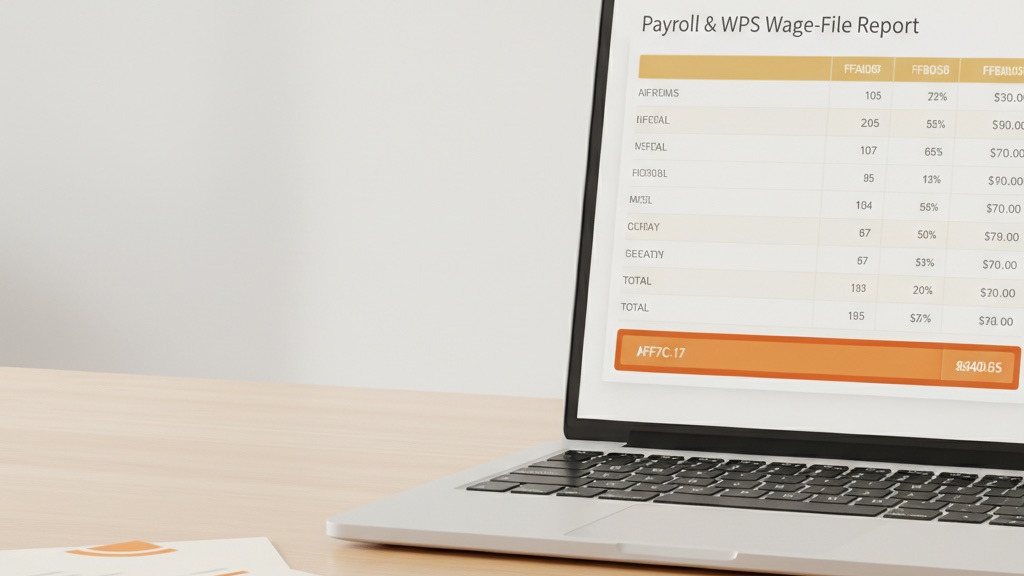
Since January 2026, the Wage Protection System (WPS) through the Mudad platform has been mandatory for every private-sector employer in Saudi Arabia — including employers of domestic workers, a category that was previously outside its scope. That expansion means far more businesses and individuals now need to understand exactly how the system works, and what's at stake if they get it wrong or fall behind. This guide walks through it end to end: what WPS/Mudad actually is, what happens when a business isn't compliant, and how all of it connects directly back to the attendance data your business keeps every day.
What is the Wage Protection System (WPS) and Mudad?
The Wage Protection System is a mechanism overseen by the Ministry of Human Resources and Social Development, in coordination with the banking sector, designed to confirm that employees are paid through bank transfer, on time, and in full, matching what's contractually owed. The logic is simple: instead of relying on an employer's word that wages were paid, the system compares reported wage data against actual bank transfer records.
Mudad is the platform that lets businesses — particularly those whose payroll systems aren't directly connected to banks — prepare and submit their monthly wage data. In practice, this means generating a fixed-format file known as the Salary Information File (SIF), containing each employee's basic wage, allowances, deductions, and net pay. This file is not a live API that systems connect to automatically — it's a specific-format file uploaded to Mudad every pay cycle. That distinction matters when you're comparing tools that claim to help with WPS compliance.
As of January 2026, compliance is no longer optional or limited to large employers — it's mandatory for every private-sector business, and now extends to employers who hire domestic workers as well. That's a meaningful shift for anyone who assumed this system didn't apply to them.
Non-compliance penalties: numbers you can't ignore
Late or mismatched wage data submissions aren't a minor administrative slip. The consequences are concrete and immediate:
- A fine of roughly SAR 3,000 per affected employee — which adds up fast for a business with dozens of employees on payroll.
- Suspension of Qiwa and Muqeem services — halting essential processes like issuing or renewing work visas, transferring sponsorship, and renewing residency permits until the issue is resolved.
- A downgrade in your Nitaqat classification — directly affecting your ability to recruit new workers and access the benefits tied to higher classification tiers.
The core point: non-compliance isn't a distant theoretical risk. It's an immediate operational blocker that affects your ability to manage your workforce normally.
Where attendance meets compliance
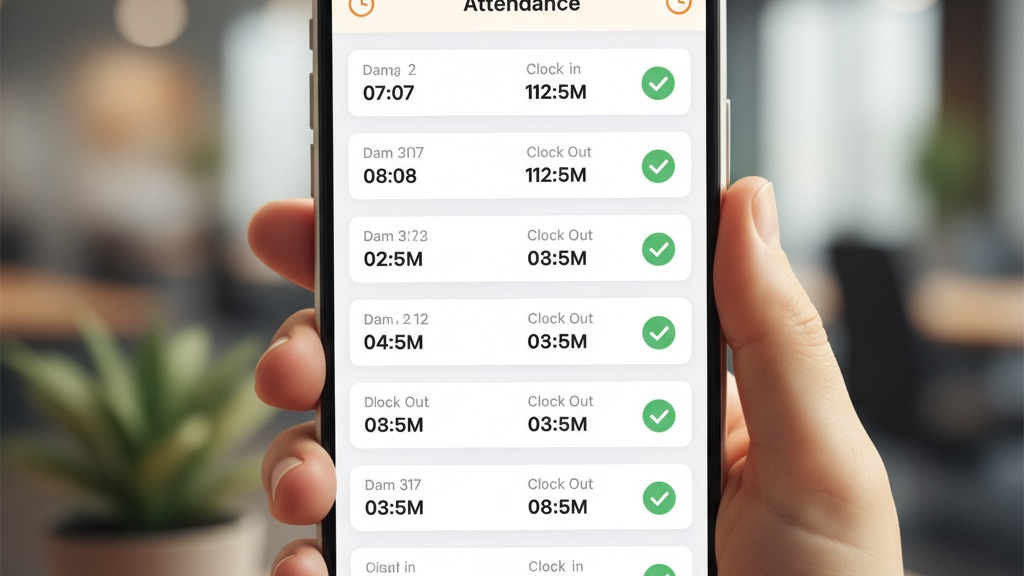
Many business owners treat WPS and Mudad as a pure payroll issue, but accurate payroll starts with accurate attendance data. The basic wage alone isn't enough to build a correct wage file when there's overtime, absence, or a special Ramadan schedule in play — and all of that originates in the daily attendance record, not the employment contract alone.
Overtime under Article 107
Saudi Labor Law governs overtime calculation under Article 107: an employee is entitled to their basic wage for overtime hours, plus 50% of the basic wage for every hour beyond 8 hours in a day or 48 hours in a week. The hourly rate used for this calculation is typically derived from the monthly basic wage divided by 26 days and then by 8 hours (basic wage ÷ 26 ÷ 8).
This is the general rule as set out in the Labor Law, but the exact calculation can vary depending on contract type and specific edge cases — check the implementing regulations or your legal advisor before running actual payroll numbers.
Breaks and long shifts
Any shift of 5 continuous hours or more requires a break of at least 30 minutes. Recording these breaks accurately isn't a formality — it's part of Labor Law compliance, and it's also a record that protects the business in any review or dispute.
The Ramadan schedule
During Ramadan, working hours for Muslim employees are reduced to 6 hours per day. Any attendance system that doesn't automatically distinguish between the normal schedule and the Ramadan schedule leaves HR with a full month of manual adjustment every year — along with everything that manual adjustment can get wrong.
The bottom line: attendance data — actual hours worked, overtime, breaks, and Ramadan schedules — is the real input that the wage file is built on. The more accurate that data is, the more likely your wage file submitted through Mudad is correct the first time.
Your attendance record is your legal evidence
There's an angle here that often gets overlooked: attendance data isn't only an input for payroll — it's also the evidence both sides rely on when there's a disagreement. The Qiwa platform lets employees file a labor dispute directly by phone, without needing to visit a labor office in person — meaning the path to filing a dispute is easier to access than it's ever been.
In that environment, a business without an accurate, time- and location-stamped attendance record is in a weaker position in any dispute over hours worked, overtime, or absence — while a business with a clear record enters that conversation with an objective basis to stand on. In other words: your attendance record isn't just an administrative tool. It's your first line of defense.
We go deeper on this idea when comparing focused attendance tools to full HR suites — see our TimeMobi vs Jisr and TimeMobi vs Jibble comparisons to understand exactly where attendance-record accuracy makes a real difference.

How TimeMobi helps you get wage-file ready
TimeMobi is an attendance tool built to log every clock-in and clock-out accurately through GPS and geofence verification, so your business knows exactly when and where each employee started and ended their shift. That accurate foundation lets the system calculate overtime, breaks, and the Ramadan schedule automatically instead of leaving it to a manual adjustment every month, with dates shown in both Hijri and Gregorian calendars — which matters because government reporting runs on the Hijri calendar.
The result: your WPS wage file (SIF), generated from attendance. TimeMobi's WPS page calculates each employee's monthly pay — basic, housing, approved overtime and absence deductions — flags missing IBANs or ID numbers, and exports the wage file in the official WPS format, instead of piecing it together manually from scattered records. To be clear: it's a file you submit through your usual channel — not a direct integration with Mudad, and not an official government certification. The WPS wage file is included in the Business and Premium plans.
If you already run a separate payroll or HR system and just need an accurate attendance layer feeding into it, that's exactly the gap our time attendance buying guide is built to address in more depth.
Quick compliance checklist
- Confirm your business is registered on Mudad with your bank account correctly linked.
- Verify that the reported basic wage matches what's stated in each employee's contract.
- Log daily and weekly hours accurately, and watch the 8-hour daily / 48-hour weekly limits.
- Calculate overtime per Article 107 (basic wage + 50% for overtime hours).
- Document at least a 30-minute break for every shift of 5 hours or more.
- Turn on the Ramadan schedule (6 hours/day) for Muslim employees ahead of the month.
- Retain your attendance and payroll records long enough to cover any future review or dispute.
- Submit the Salary Information File (SIF) via Mudad on time, every pay cycle, without delay.
- Check your Nitaqat classification periodically — it's directly tied to your compliance record.
Bottom line
WPS/Mudad compliance is no longer something only large employers need to think about — since January 2026 it applies to nearly everyone, including employers of domestic workers. Businesses that take it seriously start in one place: an accurate attendance record that reflects real hours worked, overtime, breaks, and Ramadan schedules. That record is what makes preparing your wage file faster and less error-prone — and it's also what protects you in any dispute filed through Qiwa.
Start with attendance records that back up your compliance
14-day free trial, no credit card, first location set up in minutes.
Start Your Free 14-Day Trial →